Introduction
The United Arab Emirates (UAE) is one of the most dynamic markets in the world for entrepreneurs and investors. With simplified regulations, world-class infrastructure, and zero personal income tax, it offers unmatched opportunities to start and scale a business.
But before you begin your UAE business journey, there’s one crucial decision to make:
Should you register your company in the Mainland or in a Freezone?
Both options have unique benefits — and choosing the right one can make a big difference in your operations, costs, and long-term strategy.
At Bridge Consultancy FZE, we guide investors step-by-step to select the best structure based on business goals, industry type, and growth plans.
What Is a Mainland Company?
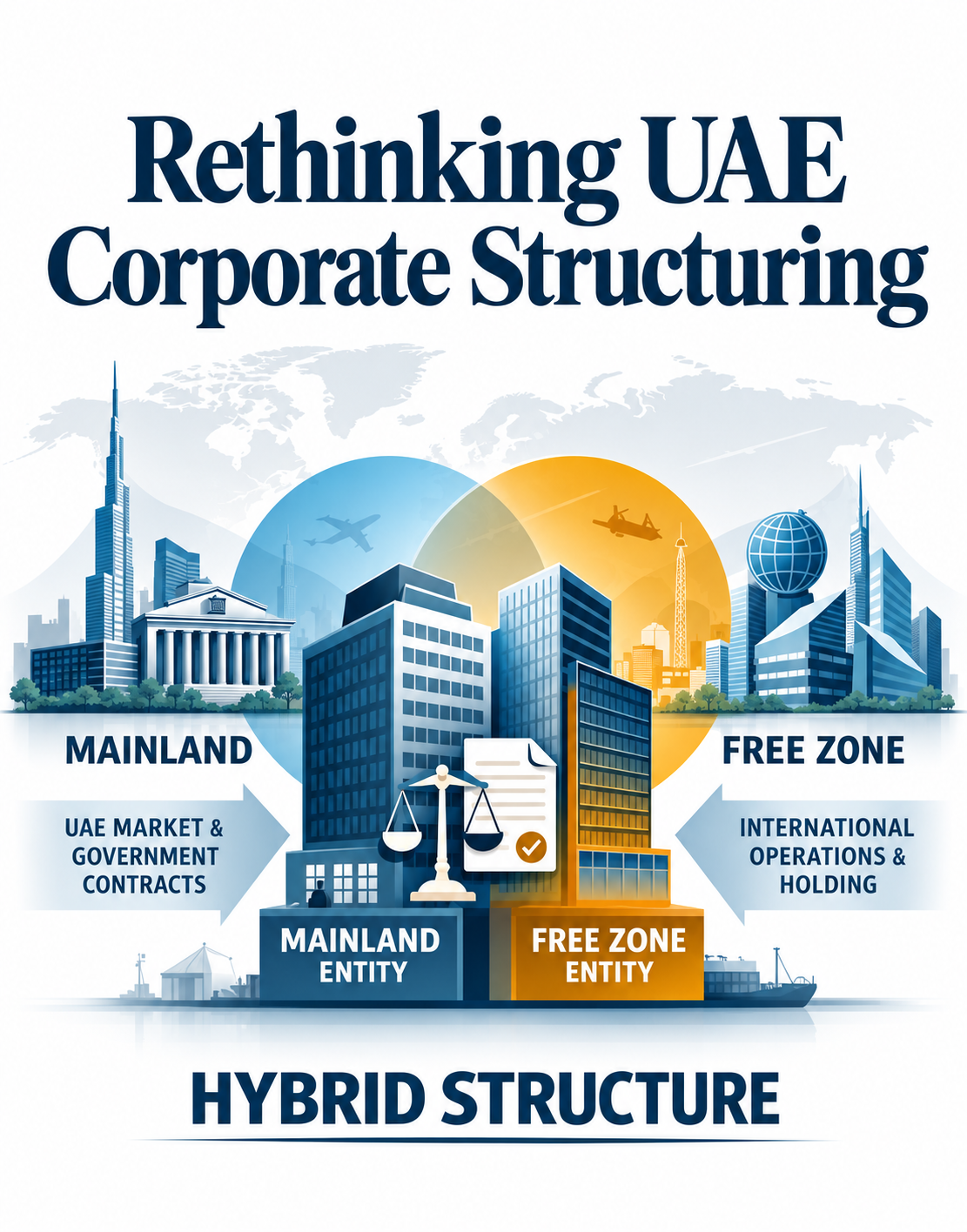
A Mainland Company is registered under the Department of Economic Development (DED) of a specific emirate. It allows you to operate anywhere across the UAE, without geographical restrictions.
Key Advantages
- Operate freely across the UAE and internationally
- Eligible for government contracts and local tenders
- No restrictions on trade with UAE mainland clients
- Unlimited visa quota based on office size
- 100% foreign ownership (for most activities since 2021)
- No minimum capital requirement for most business types
- Full profit repatriation and tax efficiency
Ideal For
- Companies targeting local UAE markets
- Retail, construction, trading, and service sectors
- Businesses that need on-ground offices or showrooms
Example: A cleaning and maintenance firm serving residential clients in Dubai would benefit from a Mainland License because it needs access to the entire UAE market and direct local contracts.
What Is a Freezone Company?
A Freezone Company operates within a designated economic area governed by its own regulations and authority. The UAE hosts more than 40+ Freezones, each catering to specific industries such as technology, logistics, media, and finance.
Key Advantages
- 100% foreign ownership (no local partner needed)
- Zero import/export duties within the Freezone
- Corporate tax exemptions (depending on Freezone policy)
- Simplified setup process — often done in a few days
- No restrictions on capital repatriation
- Customs benefits and logistics support
- Networking with industry-specific companies
Ideal For
- International trading and export-import businesses
- Tech startups, e-commerce, consulting, and media firms
- Entrepreneurs who don’t need to trade directly within UAE mainland
Example: An e-commerce company selling digital products globally can thrive in a Freezone such as Dubai Internet City or Sharjah Media City due to flexible digital licensing and international focus.
Mainland vs Freezone: A Detailed Comparison
| Feature | Mainland Company | Freezone Company |
|---|---|---|
| Ownership | 100% foreign ownership (for most sectors) | 100% foreign ownership |
| Business Scope | Operate anywhere in UAE + internationally | Restricted to Freezone & international markets |
| Office Requirement | Must have an office/physical address (Ejari) | Office optional or flexi-desk available |
| Visa Eligibility | Multiple visas (based on space) | Limited visas (based on package) |
| Taxation | 9% corporate tax above AED 375,000 | Varies; many zones offer exemptions |
| Customs Duty | Applicable for local trade | Exempt for within Freezone |
| Setup Speed | 3–5 working days | 1–3 working days |
| Ideal For | Local service providers, construction, retail | International trade, tech, e-commerce, media |
Watch: Voice Search in Action
How to Choose the Right Structure
- Where are your clients located?
If most clients are within the UAE → Choose Mainland. If mostly international → Choose Freezone. - Do you plan to expand across the UAE?
Mainland allows unrestricted operations and local contracts. - Do you need a physical office?
Mainland requires one; Freezone offers flexible virtual options. - Do you need specific facilities?
Freezones often provide industry-specific infrastructure (warehouses, studios, labs). - Are you targeting cost efficiency or market reach?
Freezones offer lower setup costs, while Mainland offers greater scalability.
How Bridge Consultancy FZE Helps You Decide
- One-on-one business assessment to identify your best setup path
- Company registration (Mainland, Freezone, or Offshore)
- Bank account setup & PRO services
- VAT registration and annual compliance
- Investor and employee visa processing
- Tailored advisory for long-term scalability
We don’t just form your company — we help you build your future in the UAE market.
Frequently Asked Questions (FAQ)
Q1: Can I convert a Freezone company into a Mainland company later?
Yes, you can, but it involves restructuring, new licensing, and approvals from both authorities. Bridge Consultancy assists with full migration support.
Q2: Can a Freezone company trade directly with UAE Mainland clients?
No, it must appoint a local distributor or agent for mainland trade.
Q3: Which setup is cheaper?
Freezones usually have lower initial setup costs, but Mainland offers greater earning potential through unrestricted operations.
Q4: How long does it take to register a company?
Mainland: 3–5 working days (depending on DED). Freezone: 1–3 working days (depending on authority).
Q5: What about taxes and repatriation?
Both offer 100% repatriation of capital and profits, and both remain tax-friendly, with 9% corporate tax applying only to profits above AED 375,000.
Final Thought
Choosing between a Mainland and Freezone company isn’t just a legal decision — it’s a strategic move that shapes your growth path in the UAE.
If you value flexibility, market access, and scalability — Mainland is your best option.
If your focus is international operations, low setup cost, and streamlined logistics — Freezone offers unbeatable advantages.
At Bridge Consultancy FZE, we simplify the choice, handle the process, and ensure your business is structured for long-term success — from your first license to your first client.